
T: +86-18066442232
E: sylvia@wzhongshuojixie.com
E: sylvia@wzhongshuojixie.com
Wanquan Industrial Zone, west of National Road 104, Sunlou Village, Wanquan Town, Pingyang County, Wenzhou City, Zhejiang Province
Views: 0 Author: Site Editor Publish Time: 2025-11-14 Origin: Site


From cafés to juice bars and major fast-food chains, the humble paper straw has become a symbol of sustainable change. Yet few people realize how much technology and precision go into making something so simple. Behind every eco-friendly straw lies an advanced paper straw machine — a piece of engineering designed to balance speed, consistency, and environmental responsibility. At Wenzhou Hongshuo Machinery Co., Ltd., each production line represents years of refinement, transforming plain rolls of kraft paper into strong, safe, and biodegradable drinking straws that meet international standards.
The journey of a paper straw starts long before it reaches the production floor — it begins with material selection. Every roll of paper used must meet specific requirements in terms of thickness, fiber quality, and coating properties. Manufacturers commonly choose kraft paper with a GSM range between 60 and 120, depending on the straw’s intended use. Paper that is too thin may collapse when wet, while paper that is too thick can reduce flexibility and comfort.
Equally important is the glue or bonding agent. Only food-safe, biodegradable adhesives are acceptable for global markets. These must not alter the taste of beverages or release harmful residues. Some factories now adopt recyclable or compostable glues, aligning with sustainability goals. Wenzhou Hongshuo Machinery designs its systems to handle both traditional glued formats and advanced glue-free production — a reflection of evolving global regulations and consumer expectations.
Paper straws are made with multiple layers — or plies — of paper rolled together. The number of plies directly affects strength and water resistance. Three-ply paper is the standard, offering ideal stiffness without excessive weight. Four-ply paper, however, adds an extra layer of protection, ideal for beverages that are consumed slowly or served at higher temperatures. In addition to layering, fiber direction and adhesive penetration are controlled with precision, ensuring smooth surface texture and uniform thickness.
Once the paper material is approved, it moves to the slitting stage. Giant paper rolls are fed into a slitting machine, which cuts them into narrow strips. These strips will later become the outer, middle, and inner layers of the straw. The accuracy of slitting determines the alignment during winding, which ultimately affects both appearance and usability.
To ensure perfect alignment, Wenzhou Hongshuo’s equipment includes automatic tension balancing systems. These maintain consistent paper feed rates and prevent curling or tearing. The rolls are then labeled, stored, and prepped under controlled humidity conditions to prevent warping — a crucial step that maintains quality before the forming process begins.
This is the core of straw manufacturing and the point where technology shines. The paper straw machine feeds several pre-slit paper strips into a mandrel, wrapping them in a spiral motion. As each layer winds around the mandrel, glue (or mechanical heat pressure in glue-free systems) bonds them into a solid cylindrical form.
The speed and precision of winding determine the straw’s surface finish and strength. Wenzhou Hongshuo Machinery integrates servo motors and programmable logic controls (PLCs) to achieve exact synchronization between the mandrel rotation and paper feeding. This precision ensures that each straw is identical, both in dimensions and performance.
Traditional machines use food-safe adhesives to bond paper layers, creating smooth and durable straws. The glue-free method, however, uses a combination of controlled heat and pressure to fuse the paper fibers naturally. This approach eliminates chemical waste, reduces drying time, and supports stricter environmental standards. Hongshuo’s hybrid designs allow operators to easily switch between both methods based on production needs.
Mandrels define straw diameter and must maintain exact rotation speeds. If the web tension fluctuates, the paper can wrinkle or separate. Advanced sensors continuously monitor these variables, ensuring uniform quality. Periodic alignment checks and automatic adjustments reduce material loss and guarantee consistency even during long production runs.
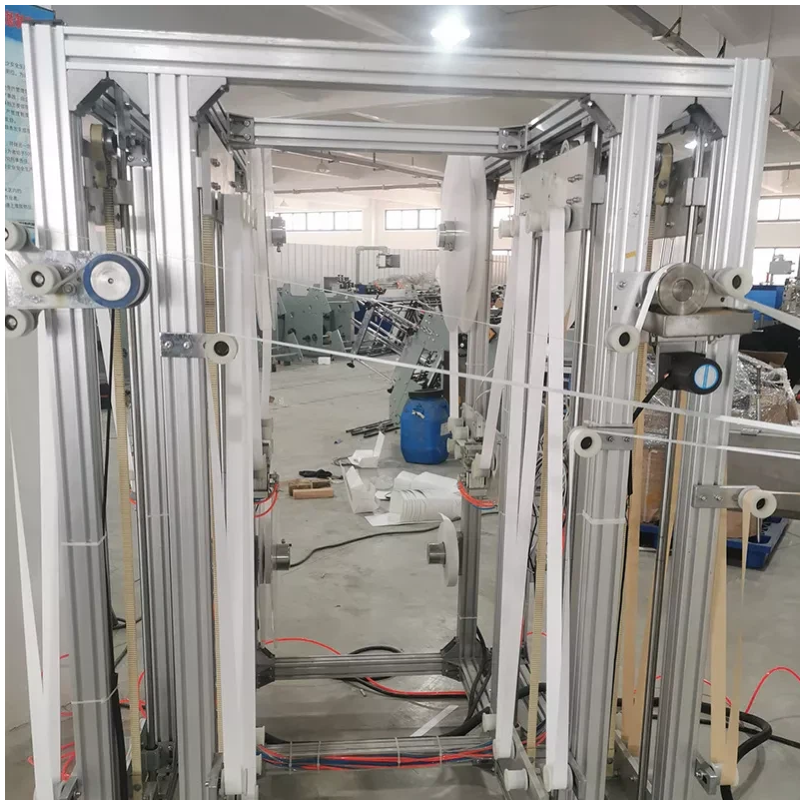
After forming, the continuous paper tube is transferred to the cutting unit, where it’s sliced into precise lengths. Speed and accuracy are essential here: even a one-millimeter deviation can affect packaging or customer satisfaction. After cutting, the straws go through a thermostating and drying chamber that stabilizes shape and evaporates excess moisture, ensuring the glue or bonding is fully set.
Finishing lines are highly automated. They handle edge trimming, polishing, and inspection for minor defects. Depending on customer requirements, the straws may then be printed, individually wrapped, or packed into paper boxes. Hongshuo’s systems are modular, allowing for seamless integration of printing or packaging attachments for customized branding.
Every straw must pass several tests before it leaves the factory. Quality inspectors measure tensile strength, assess surface smoothness, and check for delamination or uneven bonding. Water immersion tests simulate real usage, ensuring the straw maintains shape and integrity for the intended time.
Food safety compliance is another cornerstone. Hongshuo’s machines are CE, SGS, and ISO certified, and the company’s production processes meet FDA standards for food-contact materials. Automated sensors continuously record operating data, allowing real-time quality tracking and reducing the risk of contamination.
Increasing production efficiency requires smart engineering. Factors like winding speed, glue-drying rate, and cutter synchronization can all influence total output. Hongshuo’s latest systems use closed-loop servo controls to maintain balance between speed and precision. With speeds up to hundreds of straws per minute, these machines deliver consistent results without compromising quality.
Another key to efficiency is maintenance. By incorporating self-cleaning features and automatic lubrication systems, downtime is minimized. Operators can perform quick cleaning between runs, ensuring that adhesive buildup or paper dust never interrupts production. Combined with energy-efficient motors, these enhancements make Hongshuo’s machines both powerful and sustainable.
Innovation never stops in the paper straw industry. Water-based glues that cure faster and biodegrade more cleanly are becoming the norm. Waste-reduction systems, such as scrap collection and reuse mechanisms, help factories lower operational costs and carbon footprint.
Quick-change tooling is another breakthrough worth noting. This design allows workers to switch straw sizes or patterns within minutes, instead of hours, dramatically improving flexibility for customized orders. At Wenzhou Hongshuo Machinery, ongoing R&D continues to refine these technologies, pushing the boundaries of automation and environmental performance.
From the selection of raw materials to precision winding and packaging, every stage of paper straw production demonstrates the harmony between innovation and sustainability. Through advanced paper straw machine technology, Wenzhou Hongshuo Machinery Co., Ltd. enables manufacturers around the world to create high-quality, biodegradable straws that meet modern demands. Each line reflects not only technical excellence but also a commitment to a cleaner future. If you’re interested in learning more about our paper straw making equipment, visiting our facilities, or receiving tailored specifications for your project, contact us today to start your sustainable manufacturing journey.
1. What kind of paper is best for paper straw manufacturing?
Food-grade kraft paper, typically between 60–120 GSM, is ideal. It offers strength, smoothness, and biodegradability, meeting international food-contact standards.
2. What’s the difference between glued and glue-free paper straw machines?
Glued machines use food-safe adhesive between layers, while glue-free models rely on pressure and heat bonding — a cleaner and more eco-friendly method.
3. How do manufacturers maintain consistent straw quality?
Quality depends on precise web tension, paper GSM, and accurate cutting. Automated monitoring systems help maintain consistency across long production runs.
4. What advantages do Wenzhou Hongshuo paper straw machines offer?
They feature servo control, quick-change tooling, waste reduction technology, and global certifications, ensuring efficient, sustainable, and reliable straw production.


