
T: +86-18066442232
E: sylvia@wzhongshuojixie.com
E: sylvia@wzhongshuojixie.com
Wanquan Industrial Zone, west of National Road 104, Sunlou Village, Wanquan Town, Pingyang County, Wenzhou City, Zhejiang Province
Views: 0 Author: Site Editor Publish Time: 2025-11-26 Origin: Site


Profitability in paper straw production is a result of carefully balancing multiple factors that affect revenue, costs, productivity, quality, and market positioning. For companies seeking to invest in sustainable packaging, understanding these levers is essential. At Wenzhou Hongshuo Machinery Co., Ltd., our high-speed paper straw machine offers manufacturers the tools needed to optimize production, reduce waste, and enhance product quality while keeping operational costs in check. With increasing demand for eco-friendly alternatives, manufacturers who carefully design their production line can not only meet market needs but also generate significant long-term returns.
Revenue is the foundation of profitability. In paper straw production, revenue levers are determined by the product mix, packaging, and the market segment served. Companies that strategically design their product lines can maximize revenue potential while maintaining flexibility to respond to changing trends.
Offering a variety of straw sizes, colors, and finishes can significantly impact sales. Businesses that produce standard straws alongside specialty straws—such as oversized smoothie straws, striped designs, or customized branded straws—can cater to different customer segments. This flexibility allows manufacturers to capture both high-volume bulk orders and premium orders at higher margins. By combining regular, cost-effective straws with seasonal or niche designs, a production line can maintain steady revenue throughout the year without relying solely on one product category.
Packaging is more than a protective layer; it is a revenue enhancer. Eye-catching packaging, eco-friendly labeling, and customizable designs add perceived value and allow businesses to command a premium price. Companies using Wenzhou Hongshuo Machinery Co., Ltd.’s paper straw machine can easily integrate precise measurements and consistent quality into their packaging process. This ensures packaged straws maintain a professional look, which is particularly important when selling in retail environments where shelf appeal and consumer perception directly influence purchase decisions.
Focusing on niche markets, such as organic cafés, luxury restaurants, or environmentally conscious brands, enables higher margins. Premium customers are willing to pay more for sustainable and visually appealing products. Therefore, aligning production capabilities with niche market requirements—like specialty paper types, unique diameters, or colored designs—can enhance profitability beyond standard bulk sales. Strategic partnerships with restaurants and eco-brands can also create long-term contracts, ensuring predictable revenue and stable cash flow.
Reducing costs without compromising quality is another critical component of profitability. Several cost levers can be strategically managed in paper straw production.
The cost of paper rolls and food-grade adhesives represents a significant portion of production expenses. Efficient sourcing from reliable suppliers can reduce material costs while ensuring consistency. Choosing high-quality paper reduces waste due to tearing or irregular shapes during production. For manufacturers using glue-free machines, costs may be further reduced as less adhesive is required, and processing times are faster, lowering operational expenditure and improving overall efficiency.
Choosing between glued and glue-free production affects both cost and operational complexity. Glue-free machines, such as those provided by Wenzhou Hongshuo Machinery Co., Ltd., eliminate the need for extensive adhesive handling, reduce downtime caused by glue residue, and enhance production efficiency. This not only reduces labor requirements but also allows for more predictable operational costs. In addition, glue-free production aligns with environmentally conscious consumer expectations, potentially opening additional revenue channels.
Energy consumption, including electricity for motors and heaters, accounts for ongoing operational costs. High-efficiency paper straw machines with automated feeding, cutting, and rolling minimize wasted energy. Additionally, automation reduces the dependence on manual labor, allowing operators to oversee multiple processes simultaneously. This improves efficiency, reduces human error, and ensures consistent output, which collectively contribute to lower per-unit costs and higher profit margins.
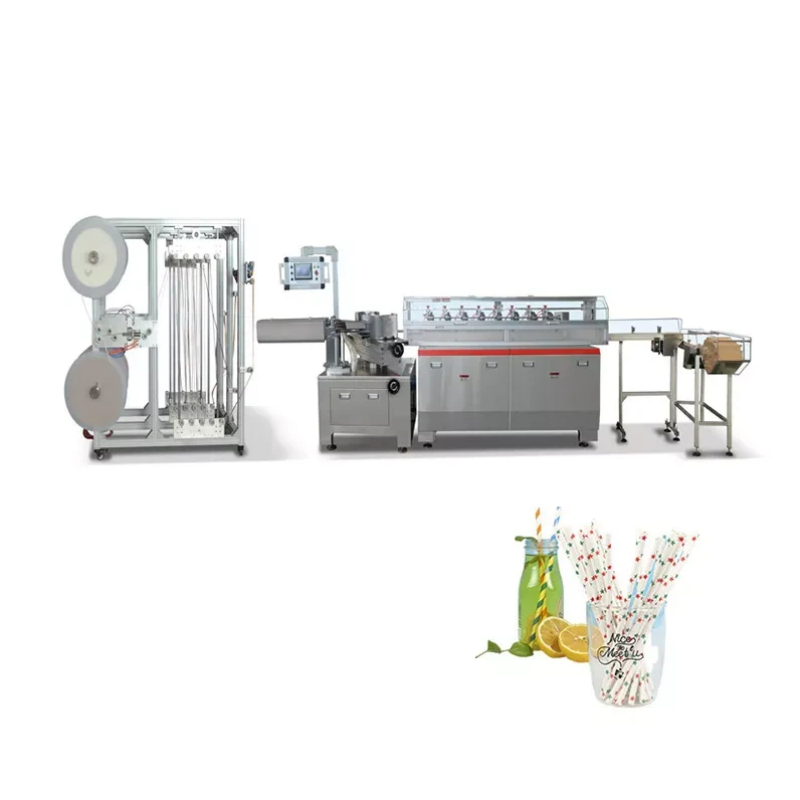
A highly productive production line translates into more output per hour and, consequently, higher revenue potential.
Choosing the right machine speed is crucial. High-speed machines increase output but require sufficient market demand to absorb the additional volume. Wenzhou Hongshuo Machinery Co., Ltd. offers machines ranging from entry-level to industrial-scale, allowing businesses to scale production according to market growth while avoiding underutilization. Careful planning ensures that machine capacity matches both seasonal peaks and regular orders, minimizing idle time and maximizing the value of each operational hour.
Automated systems reduce dependency on manual labor and minimize human error. Features such as automatic paper feeding, alignment, cutting, and counting enable continuous operation with minimal interruptions. This results in higher productivity and consistent product quality, both of which contribute to stronger profit margins. Automation also allows manufacturers to experiment with new designs, colors, and sizes without significant additional labor costs, enhancing market flexibility.
Quality management is not just about customer satisfaction—it is a significant cost-saving measure.
Defective products lead to returns, rework, and lost revenue. Using precision-engineered paper straw machines, businesses can maintain strict dimensional tolerances and avoid production errors that often occur in less sophisticated systems. High-quality output reduces waste and increases customer confidence, translating to repeat business and long-term profitability. Furthermore, consistent quality builds brand credibility, allowing manufacturers to negotiate better contracts with distributors and retailers.
Optimizing the production line for minimal scrap, efficient use of paper rolls, and consistent adhesive application (or glue-free alternatives) reduces raw material consumption. By maintaining a stable and precise production environment, companies can achieve both higher yield and reduced operational costs. Efficient waste management practices, coupled with reliable equipment, enhance overall sustainability—a factor increasingly valued by consumers and corporate clients alike.
Strategically selecting market channels is a powerful lever for profitability.
Selling to wholesale buyers allows for bulk orders and stable demand, while retail channels often provide higher per-unit margins due to branding. Private label contracts with cafés, restaurants, or eco-conscious brands can generate recurring orders and premium pricing. By understanding the specific requirements and margins of each channel, companies can optimize revenue streams while balancing production capacity. Diversifying across multiple channels also reduces reliance on any single market, lowering business risk.
Adopting dynamic pricing strategies based on market trends, customer preferences, and production efficiency ensures competitive positioning while protecting profit margins. Proper market segmentation allows manufacturers to offer tailored products at prices aligned with perceived value. Strategic pricing, combined with high-quality output from a paper straw machine, strengthens profitability while reinforcing brand positioning as a sustainable packaging provider.
Selecting a reliable machine is not just a capital investment; it is a long-term operational decision.
A well-supported paper straw machine reduces downtime, ensures consistent production, and minimizes unexpected costs. Wenzhou Hongshuo Machinery Co., Ltd. provides ongoing support, technical guidance, and spare parts, which lowers total cost of ownership and protects profitability over the machine’s lifecycle. Reliable service ensures that production targets are met without costly interruptions.
Understanding the lifecycle costs—including energy consumption, wear-and-tear, and maintenance schedules—enables better planning. Machines designed for durability and minimal maintenance offer predictable expenses and reduce the risk of unplanned disruptions. This predictability allows manufacturers to budget accurately and achieve long-term profitability.
To conceptualize profitability, consider a simple scenario: a production line produces multiple straw varieties at different volumes. By analyzing fixed costs (machine depreciation, energy, labor) against variable costs (raw materials, packaging), manufacturers can estimate the monthly break-even point. Beyond this threshold, additional production contributes directly to profits. High-speed paper straw machines with automation reduce the break-even point by lowering labor and operational costs while increasing output capacity. Planning production around seasonal peaks and marketing campaigns can further optimize monthly revenue and ensure sustainable growth.
A profitable paper straw production line results from strategic management of revenue, cost, productivity, quality, and market positioning. With a well-chosen eco-friendly straw production solution from Wenzhou Hongshuo Machinery Co., Ltd., businesses can optimize efficiency, reduce waste, and achieve sustainable profitability. Contact us to explore how our machines can be tailored to your production goals and help you maximize returns while embracing eco-conscious practices.
Q1: What factors most affect the profitability of a paper straw production line?
A1: Revenue levers (product mix, premium niches), cost management (materials, energy, labor), productivity (machine speed, automation), and quality control all directly influence profitability.
Q2: How does glue-free production impact costs and efficiency?
A2: Glue-free machines reduce adhesive usage, simplify maintenance, decrease downtime, and enhance labor efficiency, which lowers operational costs and increases output.
Q3: Why is machine speed important for profitability?
A3: High-speed machines enable greater production capacity, but the speed should match market demand to avoid overproduction and underutilization of resources.
Q4: How can market channels affect profit margins?
A4: Different channels—B2B, retail, private label—offer varying volumes and pricing potential. Targeting high-margin or recurring demand segments can maximize profits.


