T: +86-18066442232
E: sylvia@wzhongshuojixie.com
E: sylvia@wzhongshuojixie.com
Wanquan Industrial Zone, west of National Road 104, Sunlou Village, Wanquan Town, Pingyang County, Wenzhou City, Zhejiang Province
Views: 0 Author: Site Editor Publish Time: 2026-05-26 Origin: Site


Can regular paper straws truly survive the growing global push against plastic? While demand peaks, conventional adhesive lines trouble factories with high costs, messy spills, and slow curing times. A modern No-Glue Paper Straw Machine solves these operational headaches entirely. This comprehensive guide details how glue-free systems run and explains why top manufacturing brands now choose them to scale up production.
● Integrating a modern No-Glue Paper Straw Machine eliminates bulk industrial adhesive expenses to maximize factory ROI.
● Thermal and ultrasonic bonding mechanisms deliver food-grade purity while achieving 40-50% higher consistency in straw wall thickness.
● Removing liquid glue basins prevents line clogging, slashes daily maintenance downtime, and optimizes overall equipment effectiveness (OEE).
● Upgrading to adhesive-free equipment future-proofs production against tightening international compliance standards, including FDA and European food-contact rules.
Understanding the engineering behind an adhesive-free line reveals how it outpaces traditional machinery. The entire process relies on mechanical synchronization and advanced physics rather than chemical binding agents.
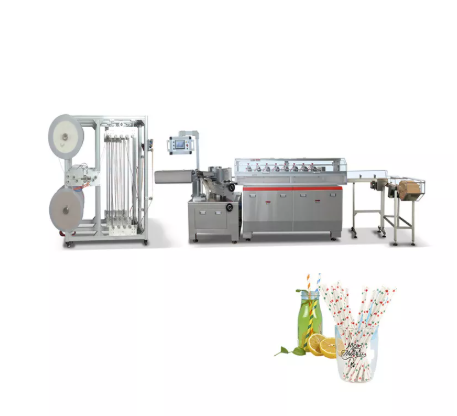
The production cycle begins at the raw material unwinding racks. Dual or triple-ply paper rolls feed into the system simultaneously. Multiple servo motors manage individual tension control systems dynamically. If the paper slackens or pulls too tightly, integrated sensors adjust the feed speed instantly. Consistent tension prevents tearing and guarantees a flawless feed rate into the forming block.
Once fed, the paper strips wrap around a fixed steel mandrel. Winding belts spin at high speeds to form a continuous helical tube. Traditional setups apply liquid glue during this winding stage. In contrast, this machine uses specialized base papers treated with a thin, food-safe bio-polymer coating. As the layers overlap on the mandrel, they prepare for immediate molecular bonding.
The core of the machine lies in its innovative fusion engine, which completely replaces chemical adhesives. Manufacturers typically utilize one of two primary bonding technologies:
Feature | Thermal Compression Bonding | Ultrasonic Bonding Technology |
Primary Mechanism | Directed conductive heat with high pneumatic pressure | High-frequency acoustic vibrations creating localized friction |
Energy Consumption | Moderate to high continuous power | Low standby power, high efficiency during activation |
Material Best Fit | Standard PLA-coated or bio-polymer papers | Dense, multi-layered natural fibers and barrier papers |
Processing Speed | Steady, linear throughput speeds | Ultra-fast, immediate molecular welding |
Achieving a rigid structure requires balancing three distinct variables. The centralized control system monitors the temperature of the heating elements or ultrasonic horns continuously. Simultaneously, pneumatic cylinders apply uniform pressure across the forming layers. Finally, the system tracks the natural fiber moisture content of the paper. Correct moisture levels prevent the paper from scorching and ensure a reliable, hermetic seal.
As the fused paper tube slides off the mandrel, it encounters the cutting assembly. A multi-knife rotary cutting module moves parallel to the moving tube. This flying-knife mechanism slices the tube into precise straw lengths without pausing production. The ultra-sharp circular blades deliver a burr-free edge finish, which prevents fraying during packaging.
After cutting, automated outfeed conveyors collect the finished straws. A specialized sorting ramp aligns them neatly for quality inspection. This section connects directly to automatic counting and wrapping machinery. The seamless integration eliminates manual handling and maintains strict hygienic standards before final packaging.
An advanced Programmable Logic Controller (PLC) acts as the brain of the machine. Operators use an intuitive touchscreen interface to input parameters like target length, cutting speed, and heating temperatures. The PLC coordinates the servo drives, cutters, and fusion engines simultaneously. Real-time diagnostic data alerts operators to minor shifts immediately, which keeps the system running at peak performance.
Removing liquid glue changes everything about daily factory floor operations. It simplifies the manufacturing environment and solves several persistent production problems simultaneously.
Traditional straw machines require a liquid glue bath that splashes onto surrounding components. Glue buildup clogs guiding rollers and jams delicate mechanical assemblies. Operators usually spend up to an hour before and after every shift cleaning these sticky basins. Eliminating adhesives removes this physical mess entirely, allowing for a cleaner, safer work environment.
Glue-bound straws cannot ship out immediately after cutting. They require dedicated storage space and hours of curing time to dry completely. If the factory humidity spikes, drying times slow down even further. A glue-free machine bonds materials instantly at the molecular level, allowing finished products to go directly from the conveyor into boxes.
Liquid adhesives contain chemical formulations that require strict oversight. If a glue basin overheats or sits too long, the adhesive can degrade and cause chemical contamination risks. Glue-free lines rely exclusively on thermal or mechanical pressure, ensuring zero risk of chemical migration into the beverage.
With no glue basins to refill and no clogged nozzles to clean, scheduled stoppages drop dramatically. Changing paper rolls becomes a rapid, clean process. Streamlining the manufacturing cycle this way keeps your machinery running consistently across multiple consecutive shifts without interruption.
Note: Eliminating chemical adhesives naturally keeps your cutting blades sharper for longer periods, as there is no sticky residue to dull the cutting edges.
High-volume production relies on consistent, uninterrupted output metrics. Shifting to an adhesive-free setup unlocks noticeable gains in total manufacturing capacity.
Standard glue-based lines often cap their speeds to allow adhesive coatings to settle correctly. Trying to accelerate causes slippage on the winding mandrel. An adhesive-free system bypasses this limitation completely. Thermal and ultrasonic tools bond instantly, allowing the line to run continuously at elevated linear speeds.
Because glue-free straws require zero curing time, you no longer need large holding areas on your factory floor. Warehouses can replace bulky drying racks with active production lines or raw material storage. This change increases your weekly throughput significantly without expanding your physical building.
When liquid glue consistency varies, entire batches of paper straws can deform. They might stick to the mandrel or wrinkle during winding. These errors create costly material scrap. Glue-free technology applies uniform thermal energy across every square millimeter, drastically reducing tube rejections.
Overall Equipment Effectiveness depends on availability, performance, and quality. A glue-free line maximizes availability by eliminating cleanup stops. It improves performance through higher operating speeds and elevates quality by reducing structural defects. The resulting jump in OEE helps facilities reach demanding production goals reliably.
Purchasing a new production line requires careful consideration of long-term operational expenses. Manufacturers must evaluate how initial capital costs balance against ongoing savings.
Industrial-grade, water-resistant adhesive represents a major recurring material cost. Prices fluctuate based on chemical supply chains, impacting predictable budgeting. Eliminating bulk glue procurement saves thousands of dollars annually per production line, which directly improves gross profit margins.
Traditional lines often require dedicated operators just to monitor glue viscosity, clean nozzles, and manage drying racks. Because a glue-free machine automates the entire bonding and outfeed sequence, a single technician can easily manage multiple lines at once. This optimization reduces overall factory labor costs.
While thermal heaters require electricity, they draw predictable energy compared to large glue pumps and heated adhesive distribution networks. Furthermore, mechanical wear drops significantly without sticky dust accumulating on gears and bearings, which helps reduce long-term maintenance costs.
For a mid-sized facility producing approximately 200,000 straws per day, the savings on adhesive, labor, and reduced scrap can offset the initial machinery investment quickly. Most high-capacity manufacturing facilities report a full return on investment (ROI) within 12 to 18 months of deployment.
Beyond operational savings, the ultimate test of any manufacturing machine is the quality of the final product. Glue-free production delivers noticeable structural improvements.
Liquid glue application can vary due to pump pressure changes or temperature shifts, leading to inconsistent straw walls. An adhesive-free machine bonds pre-coated paper layers with precise pneumatic pressure. This method ensures remarkably uniform wall thickness and precise outer diameters across every production run.
Standard water-based glues can soften when exposed to acidic juices or carbonated soft drinks, causing the straw to unravel or collapse. Thermal and ultrasonic bonds fuse the base layers permanently. The resulting straw resists sogginess and maintains its structural integrity during extended use.
Consumers frequently complain about a distinct chemical smell or taste when using traditional paper straws. This issue stems from residual chemical compounds in the adhesive. Fusing paper without glue preserves the neutral profile of the natural fibers, providing a superior drinking experience.
Global regulatory bodies continue to tighten rules regarding food-contact materials. Meeting these standards is essential for maintaining market access.
Regulatory agencies like the FDA and European food safety boards inspect chemical components closely. Adhesives face intense scrutiny regarding chemical migration. Glue-free manufacturing relies on certified compostable barriers, making it much easier to secure global compliance certifications.
Many chemical glues leave synthetic residues behind that complicate industrial composting or recycling processes. A straw made entirely of natural fibers and bio-polymers breaks down cleanly and naturally, helping your final product meet strict zero-waste criteria.
Major global beverage brands want to protect their eco-friendly reputation. They prefer packaging suppliers that eliminate Volatile Organic Compounds (VOCs) and synthetic additives from their factories. Operating a clean, glue-free facility makes you an attractive partner for these sustainability-focused brands.
As legislation evolves, restrictions may expand from basic plastics to specific synthetic chemical binders found in disposable packaging. Investing in a No-Glue Paper Straw Machine ensures your production facility remains compliant with future environmental regulations.
Selecting the ideal machinery for your facility requires evaluating several technical specifications to ensure long-term compatibility.
Smaller facilities may opt for standalone components, but high-volume operations benefit most from fully integrated systems. Look for machinery that links the raw material feed, fusion engine, cutting module, and packing station into a single automated loop to optimize efficiency.
A versatile machine should handle multiple raw paper grades, ranging from lightweight inner plies to heavy, water-resistant outer layers. Ensure the fusion system adjusts easily to bond different fiber densities and coating configurations without slowing down.
If you already operate an older factory layout, floor space may be limited. Look for manufacturers that offer modular machine designs. A modular footprint allows you to replace your outdated glue sections with a clean fusion assembly without rearranging your entire plant.
Advanced PLC systems and ultrasonic horns require precise calibration. Ensure your machinery provider offers comprehensive technical support, remote diagnostics, and clear component warranties. Accessible engineering help minimizes unexpected downtime during initial setup.
Transitioning to an advanced no-glue paper straw machine answers the industry's need for faster throughput, lower overhead, and uncompromised food safety. Eliminating chemical adhesives allows brands and manufacturers to cut waste, lower operator costs, and build a highly competitive eco-friendly packaging presence. As a trusted pioneer in sustainable manufacturing equipment, HS Machinery provides high-speed, automated production lines designed to replace outdated glue-based setups. Our specialized systems optimize material consumption, enhance straw structural integrity, and ensure full compliance with international food-safety regulations. Contact our engineering specialists today for a customized ROI analysis and find the ideal high-capacity, adhesive-free solution for your facility.
A: A No-Glue Paper Straw Machine is an automated manufacturing system that forms durable paper straws without using chemical adhesives. It works by utilizing advanced thermal compression or ultrasonic bonding technology to melt food-safe bio-polymer coatings on the paper layers, fusing them instantly at a molecular level.
A: Manufacturers should choose a No-Glue Paper Straw Machine because it eliminates bulk glue procurement costs, lowers required operator labor, and removes daily glue basin maintenance. It also enhances product quality by delivering 40-50% higher consistency in straw wall thickness without chemical odors.
A: Yes, a high-quality No-Glue Paper Straw Machine features excellent calibration flexibility, allowing it to process various raw paper grades and fiber densities. The operator simply adjusts the tension and heat parameters via the centralized PLC control to match the specific material profile.
A: By completely removing liquid glues, a No-Glue Paper Straw Machine eliminates the risk of chemical migration and VOC contamination in food-contact materials. This makes it much simpler for manufacturing brands to meet strict global compliance standards, including FDA and European food safety regulations.