T: +86-18066442232
E: sylvia@wzhongshuojixie.com
E: sylvia@wzhongshuojixie.com
Wanquan Industrial Zone, west of National Road 104, Sunlou Village, Wanquan Town, Pingyang County, Wenzhou City, Zhejiang Province
Views: 0 Author: Site Editor Publish Time: 2025-12-11 Origin: Site


Diffuser sticks are made from different materials. The most common ones are rattan, bamboo, and fiber reeds. The material changes how well the diffuser spreads scent. Rattan and fiber reeds are about 60% of all diffuser sticks today:
Rattan reeds
Fiber reeds
Paper
Each kind has its own structure. This structure decides how fast the scent moves up the stick. It also affects how much scent goes into your room. Picking the right material helps you enjoy your diffuser more.
Diffuser sticks are made from rattan, bamboo, or fiber reeds. Each material changes how the scent fills your room. Rattan reeds give a steady scent and last 4 to 6 weeks. They break down naturally but should be collected in a safe way. This helps protect animal homes. Fiber reeds spread scent fast and strong, lasting up to 6 months. They work well with strong smells and need little care. Bamboo sticks are cheap and look natural. But they can get blocked and do not spread scent as well as the others. For the best results, pick good quality reeds. Flip them every week and change them when needed.
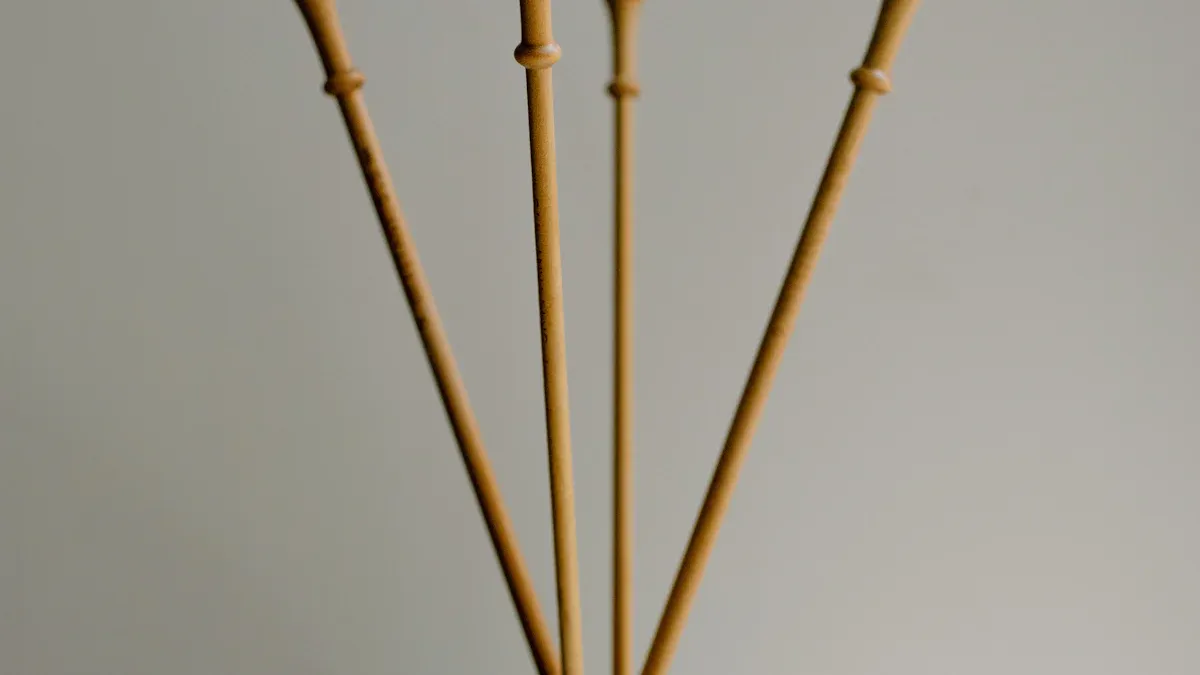
You will find rattan reeds in many reed diffuser sets. These reeds come from the rattan plant, which grows in tropical regions. Rattan reeds have a natural, porous structure. This structure lets fragrance oil travel up the reed and spread into the air. The porous nature of rattan helps the fragrance move smoothly and evenly. Thicker reeds absorb and release fragrance more slowly, while longer reeds can fill a larger space with scent. If you use a fresh cut end, the reed absorbs oil better.
Rattan reeds last about 4 to 6 weeks in a standard reed diffuser. The lifespan depends on the quality of the reed, the type of fragrance oil, and the room’s conditions. Rattan reeds are biodegradable, but oil stains can slow down how fast they break down. Harvesting rattan can cause habitat loss, so you should look for sustainable sources when possible.
Here is a table comparing some important features of rattan reeds and fiber reeds:
Feature | Fiber Reeds | Rattan Reeds |
|---|---|---|
Diffusion Speed | Fast | Moderate |
Durability | Moderate | High |
Scent Intensity | Higher initially | Lower initially |
Eco-Friendliness | High | Moderate |
You can buy rattan diffuser sticks at a low cost. For example, a pack of 50 costs about $4.99, which is $0.10 per stick. If you buy in bulk, the price drops to $0.08 per stick.
Tip: Choose high-quality diffuser stick reeds with a fresh cut for the best scent diffusion.
Bamboo sticks are another choice for diffuser sticks. Bamboo grows quickly and produces more oxygen than most trees. However, bamboo farming can lead to deforestation and habitat loss if not managed well. Bamboo sticks look natural and cost less than some other options.
Bamboo sticks are porous, so they can absorb fragrance oil. The scent moves up the stick and spreads into the room. However, bamboo sticks do not diffuse fragrance as well as rattan reeds. They can clog more easily, which slows down the scent. You may notice that the fragrance is not as strong or long-lasting with bamboo sticks.
Here is a table showing the advantages and disadvantages of bamboo sticks:
Advantages | Disadvantages |
|---|---|
Natural Appearance | Inefficient Oil Diffusion |
Cost-Effective | Higher Clogging Potential |
If you want a natural look and a low price, bamboo sticks may work for you. If you want strong, steady fragrance, you may want to try other reeds.
Fiber reeds are made from synthetic materials like cotton, polyester, and polyamides. These reeds are designed to spread fragrance quickly and evenly. Fiber reeds have a larger surface area than natural reeds, so they absorb and release fragrance oil faster. You will notice a strong scent right away when you use fiber reeds in your reed diffuser.
Fiber reeds last longer than natural reeds. They keep their shape even in humid rooms, so you get a steady fragrance for up to six months. You may need to replace them more often if you want the strongest scent. Fiber reeds are eco-friendly and break down more easily than some other synthetic products.
You can find fiber diffuser sticks in packs of 100 for about $11.57, or $0.12 per stick. If you buy 1,000, the price drops to $0.09 per stick.
Some diffuser sticks use paper as the main material. Paper reeds are lightweight and easy to use. They absorb fragrance oil quickly, but they do not last as long as rattan or fiber reeds. Paper reeds may bend or break if they get too wet. They work best in small spaces or for short-term use.
Paper diffuser sticks are biodegradable and have a low environmental impact. You can recycle them after use if they are not soaked in oil. If you want a simple, eco-friendly option for a small room, paper reeds may be a good choice.
Note: Always check if the paper reeds are made from recycled materials for a greener choice.
When you use a reed diffuser, the material of the reeds plays a big role in how well the fragrance spreads. Fiber reeds have precision-engineered pores. These pores help the fragrance oil move up the reed quickly and evenly. You get a strong and steady scent in your room. Rattan reeds have a natural structure with many small tubes. These tubes let the fragrance travel, but the pattern is not always even. Sometimes, you notice bursts of fragrance followed by lighter periods. This can make the scent distribution less reliable.
Bamboo reeds do not perform as well. Their structure can block the flow of fragrance oil. You may find that the scent is weaker and does not last as long. Paper reeds absorb oil fast, but they do not hold the fragrance for very long. If you want a consistent and strong scent, fiber reeds work best. Rattan reeds are good for a softer, more natural fragrance.
Here is a table to help you compare the scent diffusion of different reeds:
Reed Type | Porosity Features | Scent Distribution |
|---|---|---|
Fiber reeds | Uniform, engineered pores | Consistent and strong |
Rattan reeds | Natural, irregular tubes | Bursts, less consistent |
Bamboo reeds | Node-like, can clog | Weak and uneven |
Paper reeds | Quick absorption, low retention | Short-lived, light scent |
Tip: Place your reed diffuser away from drafts and direct sunlight. This helps keep the fragrance steady and long-lasting.
You can make your diffuser last longer with the right care. Fiber reeds keep their shape and work well for up to six months. Rattan reeds usually last two to three months. Bamboo reeds may clog, so you might need to replace them sooner. Paper reeds break down quickly and need frequent changes.
Follow these steps to care for your reed diffuser:
Flip the reeds every week to refresh the fragrance.
Clean the neck of the diffuser bottle to stop oil buildup.
Replace rattan and fiber reeds every two to three months for best results.
Use fewer reeds for a lighter scent or more for a stronger fragrance.
Keep your diffuser away from heat and sunlight to prevent drying out.
If you live in a humid or dusty area, clean your reeds every three to four weeks. This stops clogs and keeps the fragrance flowing. Always dispose of old reeds carefully, as the oil can stain surfaces.
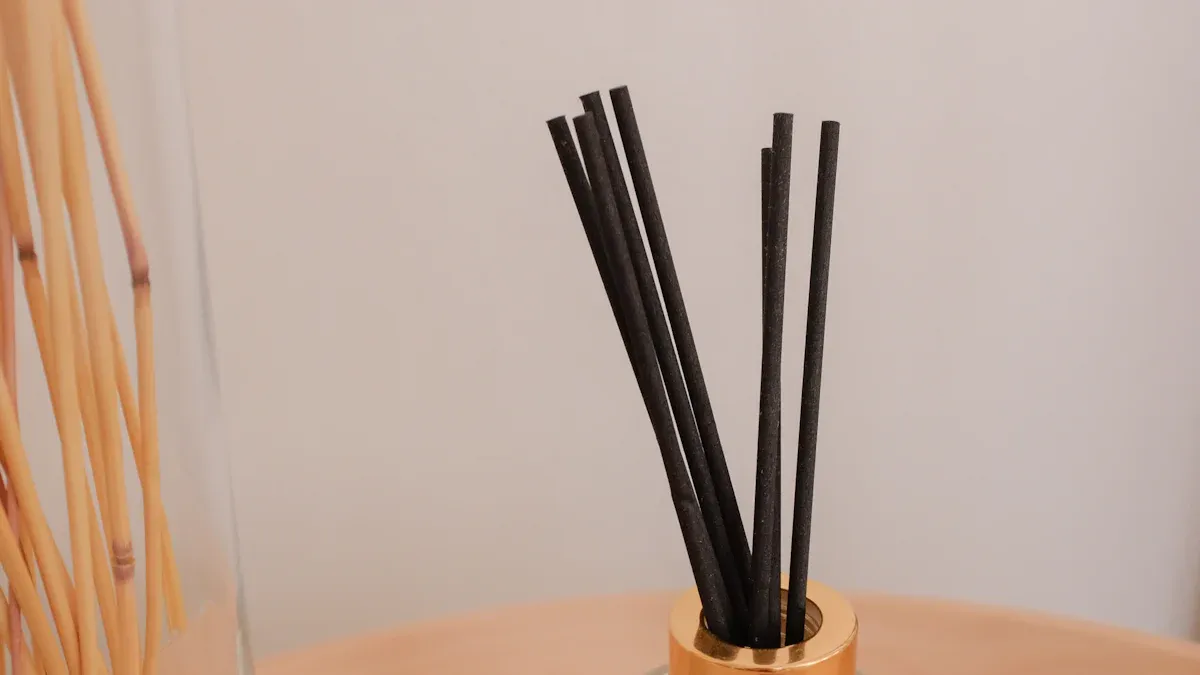
When you choose diffuser sticks, you want to know how each type performs. Each material has strengths and weaknesses. You can use the table below to compare the main types of reeds for your reed diffuser:
Type | Pros | Cons |
|---|---|---|
Fiber reeds | Long-lasting fragrance (up to 6 months). Resistant to mold and oil sludge. Ideal for bold scents needing precise diffusion. | May need replacement every 6-8 months. |
Rattan reeds | Strong initial scent burst. Appeals to those who prefer organic textures. Good for small rooms needing quick refresh. | Requires frequent flipping. Faster oil consumption. Can warp or clog in humid conditions. |
Bamboo sticks | Natural look. Low cost. | Weak fragrance diffusion. Clogs easily. |
Paper reeds | Lightweight. Biodegradable. Easy to recycle. | Short lifespan. Bends or breaks when wet. |
You see that fiber reeds give you a steady and strong fragrance for a long time. Rattan reeds work well if you want a quick scent boost and a natural look. Bamboo sticks and paper reeds cost less, but they do not spread fragrance as well or last as long.
If you want the best reed diffuser experience, you should focus on performance and quality. Rattan reeds stand out because their porous structure draws fragrance oil upward through tiny channels. This design gives you consistent fragrance delivery and makes your diffuser last longer. Rattan diffuser sticks may cost more at first, but you replace them less often, which saves you money over time.
Fiber reeds also work well if you want a bold scent and low maintenance. They resist mold and oil sludge, so you do not have to worry about clogs. For most homes, rattan or fiber reeds give you the best balance of fragrance, durability, and ease of use. If you want a natural look and do not mind a lighter scent, bamboo sticks can work for you. For small spaces or short-term use, paper reeds are a simple and eco-friendly choice.
Tip: Choose high-quality reeds and a narrow-neck bottle for your reed diffuser. This setup helps preserve fragrance oil and keeps your diffuser working longer.
When you pick a diffuser, you want your room to smell nice. The sticks you use change how strong the scent is. Some sticks soak up oil fast and spread the smell far. Other sticks work slower and do not spread as much scent. You can see how each stick works in this table:
Material | Absorption Rate | Fragrance Throw | Durability | Eco-Friendliness |
|---|---|---|---|---|
Bamboo | High | Excellent | Medium | Highly Sustainable |
Rattan | Medium | Good | High | Moderately Eco-Friendly |
Synthetic | Variable | Variable | High | Not Eco-Friendly |
Cotton | Low | Fair | Medium | Moderately Eco-Friendly |
Bamboo sticks make your room smell strong. They can fill big spaces with scent. Rattan sticks give a good mix of smell and how long they last. Synthetic sticks, like fiber reeds, keep the scent steady and last a long time. Cotton sticks work best in small rooms because they do not spread scent far.
Fiber reeds keep the smell strong all the time. They work well even if your room is humid. Rattan reeds look natural but need more care to keep the smell even. If you want a bold scent that lasts, use fiber reeds or bamboo sticks.
You want your diffuser to be easy to use. The kind of stick you choose changes how much work you do. Some sticks need flipping or replacing often. Other sticks last longer and need less care. Here is a table that shows common problems:
Material | User Challenges | Maintenance Frequency |
|---|---|---|
Fiber | Maintains structure in humidity, no flipping required | Replace every 6-8 months |
Rattan | Warps or clogs in humidity, requires frequent flipping | Replace every 3-4 months |
Fiber reeds are simple to use. You do not flip them much, and they stay in shape. Rattan reeds need more care. You may need to flip them to keep the smell fresh and replace them sooner. If you want less work, fiber reeds are a good pick.
Tip: If you want a diffuser that is easy and lasts long, choose fiber reeds or bamboo sticks. These help you enjoy a steady scent with little effort.
When you look for diffuser sticks, you find many types. Rattan, bamboo, and fiber reeds all work in diffusers. Each material changes how the scent spreads in your room. Rattan sticks give a soft and even smell. They work well for light or medium scents. Fiber reeds soak up more oil. They make the scent stronger and are good for bold smells. Bamboo does not spread scent well. You may notice the smell is weak or stops sometimes. Check this table to help you choose the right stick for your diffuser:
Material | Effectiveness | Best For |
|---|---|---|
Bamboo | Not very good, scent stops sometimes | Not recommended |
Rattan | Even scent, clear channels | Light to medium scents |
Fiber Reeds | Strong, steady scent, absorbs well | Strong scents |
Tip: Pick rattan sticks for a gentle smell. Use fiber reeds if you want a strong scent in your diffuser.
You get the best scent diffusion with fiber reeds or rattan reeds. Fiber reeds spread fragrance quickly and last longer. Rattan reeds give a natural look and steady scent. Choose based on your scent strength preference and style.
You should replace fiber reeds every 6 to 8 months. Rattan reeds work best when replaced every 3 to 4 months. If you notice a weaker scent, swap out your sticks sooner.
You should not reuse diffuser sticks. Old sticks clog with oil and dust. This blocks scent diffusion. Always use fresh sticks for the best fragrance.
Rattan and paper reeds break down naturally.
Fiber reeds use synthetic materials but some brands make them biodegradable.
Bamboo sticks come from fast-growing plants.
You help the environment by choosing biodegradable or sustainably sourced sticks.