
T: +86-18066442232
E: sylvia@wzhongshuojixie.com
E: sylvia@wzhongshuojixie.com
Wanquan Industrial Zone, west of National Road 104, Sunlou Village, Wanquan Town, Pingyang County, Wenzhou City, Zhejiang Province
Views: 0 Author: Site Editor Publish Time: 2026-05-12 Origin: Site


The transition from single-use plastics to paper-based packaging is accelerating globally. Procuring the right manufacturing equipment for this shift carries high capital risk. Buyers must evaluate machinery carefully to ensure profitable, scalable production. A standard folder-gluer carton machine cannot do the job safely for food transport. A paper lunch box machine requires distinct heat-forming and stamping capabilities. These features create the leak-proof seal needed for hot food containers. Failing to recognize this structural difference often leads to costly production bottlenecks.
This guide provides procurement managers and business owners an actionable, transparent framework. We will help you evaluate core capabilities and mitigate implementation risks. You will learn how to align machine architecture perfectly against your specific production volume. By analyzing drive systems, material constraints, and global compliance, you can make a highly informed investment decision.
Material Matching is Critical: Up to 70% of operational downtime stems from a mismatch between machine specifications and paper substrates (typically 180–350 gsm with PE/PLA coatings).
Drive Systems Dictate Uptime: Transitioning from mechanical cams to a servo paper box machine architecture increases precision, reduces maintenance hours, and stabilizes long-term output.
Scalability via Architecture: High-volume operations can effectively double throughput without doubling floor space by investing in a double lane paper lunch box machine.
Compliance is Non-Negotiable: Equipment must produce containers capable of passing stringent FDA (21 CFR) and European (EC 1935/2004) migration tests for food contact.
Production volume dictates your ideal equipment architecture. Buyers often mistake theoretical maximum speed for sustainable daily output. You must establish a clear baseline throughput requirement before contacting manufacturers. Define your exact pieces-per-minute (PPM) or boxes-per-hour (BPH) targets. Over-purchasing capacity ties up idle capital and causes inventory bloat. Under-purchasing leads to missed delivery deadlines and strained mechanical parts.
To avoid over-purchasing, map your current and projected order volumes. Consider the following variables when establishing your baseline:
Peak shift demands: Calculate the highest hourly output required during holiday seasons or peak contract fulfillment.
Operator skill levels: Novice operators require slower running speeds while they learn the equipment.
Material staging space: High-speed machines demand rapid raw material feeding. You need adequate floor space to stage paper rolls or die-cut blanks.
Once you define your BPH requirements, you can choose between single-lane and double-lane configurations. Single-lane models are ideal for mid-sized localized production. They typically produce between 300 and 800 BPH. They require less initial capital. They are also much easier for novice operators to tune, clean, and maintain.
Enterprise-scale fulfillment demands a different approach. You should explore a double lane paper lunch box machine if your target is 1,500 to 5,000+ BPH. Double-lane architecture provides a massive footprint-to-output advantage. You essentially double your throughput without doubling the required floor space. However, this architecture demands stricter raw material quality control. Poorly cut paper blanks can cause simultaneous multi-lane jams, stopping production entirely.
A machine looks impressive on a spec sheet, but its physical forming mechanics determine reliability. You must look under the hood. Evaluate how the machine bends, folds, and seals the paper substrate.
Food containers face extreme environments. They hold steaming hot liquids, greasy foods, and resist harsh transit temperature shifts. To survive these conditions, a takeaway box machine must utilize specialized hydraulic or mechanical stamping. This stamping pairs closely alongside intense heat-sealing to create flanged edges. Standard carton machines merely apply cold glue to folded edges. Cold glue dissolves when exposed to hot steam. Heat-sealing melts the PE or PLA coating directly into the paper fibers, ensuring an impenetrable, leak-proof bond.
Evaluating a servo paper box machine is crucial for protecting your investment. Traditional mechanical systems rely on complex networks of cams, gears, and chains. These parts wear down constantly. They require heavy lubrication and frequent synchronized timing adjustments.
Modern servomotors, supplied by brands like Mitsubishi or Yaskawa, provide independent digital control over every machine phase. They handle feeding, molding, and ejection independently. The outcome is superior dimensional accuracy. Servos drastically reduce mechanical wear and enable much faster troubleshooting.
Feature | Mechanical Cam System | Servo-Driven System |
|---|---|---|
Precision & Accuracy | Moderate; prone to drifting as chains stretch. | Extremely high; digitally locked synchronization. |
Maintenance Needs | High; requires constant lubrication and part swaps. | Low; fewer moving physical parts to break. |
Changeover Speed | Slow; requires manual mechanical retiming. | Fast; adjustments made via digital touchscreen. |
Noise Levels | High; clashing metal gears generate noise. | Low; smooth electrical motor operation. |
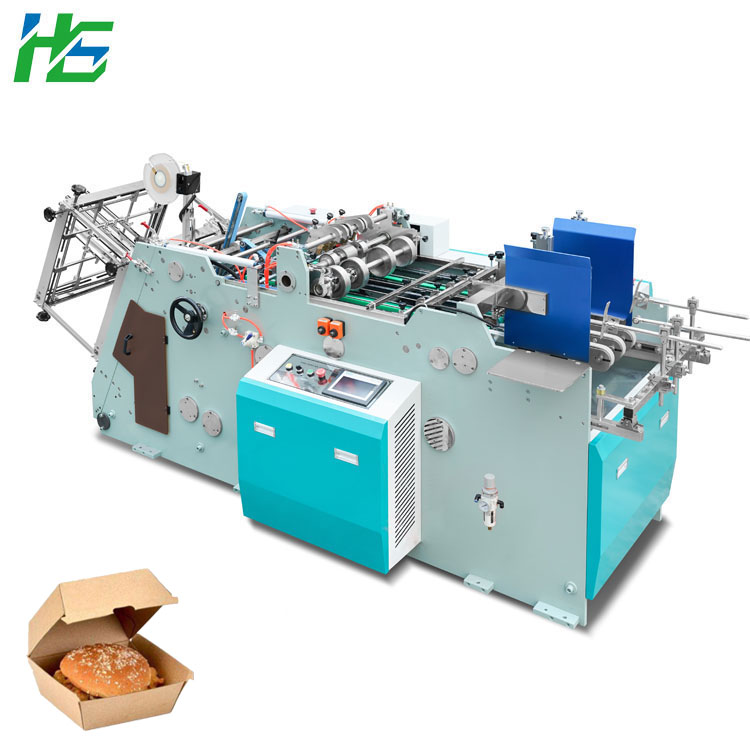
Agility wins contracts in the modern packaging industry. Your machine must handle diverse paper weights and adapt quickly to new container shapes. Relying on a single rigid box size limits your revenue potential.
Machines operate within strict physical limits. You must verify standard operating limits before purchase. Most commercial machines handle board weights between 180 and 350 gsm. Going below 180 gsm results in flimsy boxes prone to crushing. Exceeding 350 gsm strains the stamping motor and causes incomplete folds.
Integrated temperature controls are equally necessary. You must process standard Polyethylene (PE) and eco-friendly Polylactic Acid (PLA) coatings precisely. PLA has a narrower melting window than PE. A machine lacking highly sensitive temperature probes will either scorch the PLA coating or produce weak, leaking seals.
Evaluate the tooling changeover protocol closely. Can operators swap molds for different box sizes in under two hours? Many older machines require an entire shift to recalibrate after a mold swap. Fast changeovers allow you to produce multi-compartment trays in the morning and standard noodle boxes in the afternoon.
Here is a standard best-practice protocol for rapid mold changeovers:
Cooling phase: Safely power down heating elements and allow the forming block to cool.
Digital recalibration: Load the saved servo-motor profile for the new box size via the HMI touchscreen.
Physical swap: Unbolt the forming male mold and female stamping die, replacing them using a standardized quick-release pneumatic clamp.
Test run: Feed 50 sample blanks to verify seal integrity and corner precision before resuming full speed.
You should partner with a manufacturer offering robust custom mold design. Integrated CAD software allows rapid prototyping of bespoke container shapes. Specialized B2B clients, like airline caterers or massive fast-food franchises, often demand unique tray footprints. Custom mold agility secures these lucrative contracts.
Procuring industrial machinery involves calculating both the initial price tag and ongoing operational impacts. You must map these financial tiers accurately to avoid hidden profit drains.
Understanding the global price market helps you set realistic budget expectations. Equipment generally falls into three distinct tiers:
Entry-Level ($10k - $20k): Designed for basic localized supply. These units require higher manual oversight, frequent lubrication, and operate at lower speeds.
Mid-Range ($20k - $50k): Offers high automation levels. These machines suit steady regional contracts. They often include touchscreen controls and moderate changeover flexibility.
High-End ($50k+): Flagship models featuring full servo-driven motors and double-lane units. They maximize Overall Equipment Effectiveness (OEE) and minimize scrap.
Beyond the upfront purchase, you must evaluate daily operational expenses. Power consumption varies wildly depending on heating element efficiency. Most machines range from 3 kW to 15 kW. A poorly insulated heating block running at 15 kW will spike your utility bills rapidly.
Scrap rates represent another massive hidden expense. A cheap machine might save you $5,000 upfront. However, if it generates 3% more paper waste due to misalignment, it will erase those initial savings within the first operational year. High-precision forming blocks keep waste below 0.5%.
Food packaging machinery operates under strict international scrutiny. Your equipment must produce containers capable of passing stringent legal migration tests. CE or ISO-certified machinery is essential. Ensure all product-contact parts utilize food-grade stainless steel (304 or 316 grade).
End-products must pass FDA 21 CFR standards in the United States or EC 1935/2004 migration tests in Europe. These tests ensure toxic chemicals do not leach from the paper or coating into hot foods. Using machines lacking proper stainless steel tracks or using inappropriate lubricants will cause your boxes to fail these mandatory tests, risking severe legal liability.
Selecting the right machinery partner is just as important as selecting the machine itself. Many buyers fall into common procurement traps because they focus solely on the base price.
Beware of vendors selling standalone units while promising a "turnkey" business. Producing paper lunch boxes requires an entire ancillary ecosystem. You need die-cutters to punch the flat paper shapes. You need printing units for branding. You also need automatic packers to box the finished containers. A single forming machine cannot generate revenue if you lack the supporting equipment to feed it.
Scrutinize the Service Level Agreements (SLA) carefully. Hardware eventually breaks. You must evaluate spare parts availability. A heavily customized, cheap machine becomes a massive liability if a proprietary heating element takes four weeks to clear customs. Ask vendors where their spare parts are warehoused. Top-tier manufacturers utilize standard, globally available electrical components (like Schneider or Omron) to ensure you can source replacements locally.
Never sign off on a final shipment without a rigorous Factory Acceptance Test (FAT). Material incompatibility remains the leading cause of failed equipment deployments.
Best Practice: Insist on a live or video-streamed FAT using your specific coated paper stock. Ship your exact paper blanks to the manufacturer's facility. If the machine handles your specific 300 gsm PLA-coated board flawlessly at peak speed for an hour, you can authorize the shipment. Do not accept tests run on generic factory paper.
Common Mistake: Relying on pre-recorded promotional videos instead of a live FAT. Promotional videos are heavily edited. They never show the jams, the misaligned folds, or the burning smells caused by poor temperature calibration.
Choosing the right machinery dictates your success in the sustainable packaging sector. The right choice balances your immediate budget constraints against long-term operational efficiency. You must prioritize servo-driven reliability over outdated mechanical linkages. Emphasize tooling flexibility to capture diverse catering contracts. Above all, maintain strict adherence to food-contact compliance by verifying stainless steel construction and precise temperature controls.
Your next step is clear. Map your exact box dimensions and required BPH output. Source your local coated paper rolls to confirm GSM tolerances. Finally, request targeted, live throughput demonstrations from shortlisted manufacturers using your specific parameters. Methodical evaluation protects your capital and guarantees smooth production scaling.
A: The Return on Investment (ROI) heavily depends on shift schedules and local labor costs. However, full automation typically achieves ROI in 1.5 to 3 years for mid-to-high volume producers. Running the equipment across two or three daily shifts significantly accelerates this timeline by maximizing output against fixed capital costs.
A: Yes, operators can produce both types via interchangeable custom molds. However, the machine's maximum forming area and stamping pressure must accommodate the largest desired footprint. You must verify these maximum dimension limits before purchasing to ensure your multi-compartment designs fit the stamping block.
A: The most frequent cause is poor paper quality issues. Inconsistent PE coating thickness, incorrect board weight (gsm), or warped paper blanks cause severe feeding jams. Poorly calibrated heat-sealing temperatures also contribute heavily, causing boxes to stick to molds or fail leak tests.


