T: +86-18066442232
E: sylvia@wzhongshuojixie.com
E: sylvia@wzhongshuojixie.com
Wanquan Industrial Zone, west of National Road 104, Sunlou Village, Wanquan Town, Pingyang County, Wenzhou City, Zhejiang Province
Views: 0 Author: Site Editor Publish Time: 2026-05-05 Origin: Site


A no glue paper straw sounds like a small change. Yet it can reduce stops, scrap, and buyer doubts. Still, it only works when the paper straw machine stays stable.
In this article, we explain the real benefits of no glue paper straw production. You will learn how a paper straw machine makes it possible, what controls matter most, and how to choose the right setup for your orders.
Many buyers want fewer chemical inputs in the process. They may not ban adhesives, yet they ask more questions. They want clear material statements and test samples. A no glue paper straw can simplify that story. It also helps brands pitch “simpler composition” in a safer way. You should still avoid big claims you cannot prove. Instead, show a sample soak test and a seam check. If buyers run audits, they will ask how you control consistency. A clear process map helps more than slogans.
Glue systems add daily variables. They can clog in the nozzle. They can dry on rollers. They can drift after temperature changes. When this happens, the seam becomes weak or messy. Operators then stop the line and clean it. A no glue paper straw removes many glue tasks. You may cut time spent on mixing and cleaning. You may also reduce scrap from glue streaks. Still, you replace glue risk with control risk. Temperature and pressure must stay stable. If they drift, your seam can still fail.
Soak life is a common sourcing test. Bubble tea and iced drinks stress the seam. Long sipping time makes issues show fast. Glue seams can delaminate if bonding fails. Adhesive suppliers discuss delamination as a key risk in paper straws. A no glue paper straw often aims to reduce seam failure points. You should still test it in real drinks. Run cold, hot, and acidic drinks if needed. Keep tests simple and repeatable. It helps you compare suppliers in a fair way.
A glue line needs daily glue management. It needs storage, mixing, and cleanup discipline. It also needs stable drying conditions. Some teams underestimate that workload. A no glue paper straw can cut parts of that routine. It may also reduce glue inventory and handling. Yet it asks more from paper control. Paper quality variation can hurt sealing results. Humidity swings can change paper behavior. You may need better roll storage and tighter tension control. When your factory can support that, no-glue becomes easier to run.
Many brands want a stronger sustainability angle. “No glue” can support that narrative. Still, we should keep it credible and safe. Do not promise compost time in weeks, unless you tested it. Do not imply “zero chemicals” unless you define scope. Instead, explain the process and show results. Show soak tests, seam checks, and taste checks. Offer traceability for paper rolls and coatings if used. Buyers trust practical proof. They also trust consistent delivery and low defect rates. Those points sell better than bold claims.
Tip: Build a simple proof pack for buyers, including soak tests, seam photos, and a short process description.
No glue paper straw benefits vs what must be controlled
Benefit buyers want | What must stay stable in production | What to measure on samples |
Cleaner “no glue” story | Temperature zones and pressure | Seam integrity after soak |
Fewer glue-related stops | Paper tension and alignment | Scrap rate per shift |
Better drink performance | Paper quality and sealing consistency | Softening time in cold drink |
Lower daily workload | Dust control and sensor cleanliness | Cut quality and burr level |
Two seam paths dominate this category. One uses food-safe water-based adhesive. The other uses thermal or mechanical sealing. Glue-free designs aim to fuse layers without adhesive. That can remove glue mixing and nozzle cleaning. It can also change failure modes. Instead of glue delamination, you may see weak sealing from poor heat control. Operators must learn what “good sealing” looks like. They must also learn what paper changes do to it. When you train them well, it becomes easier to keep consistent results.
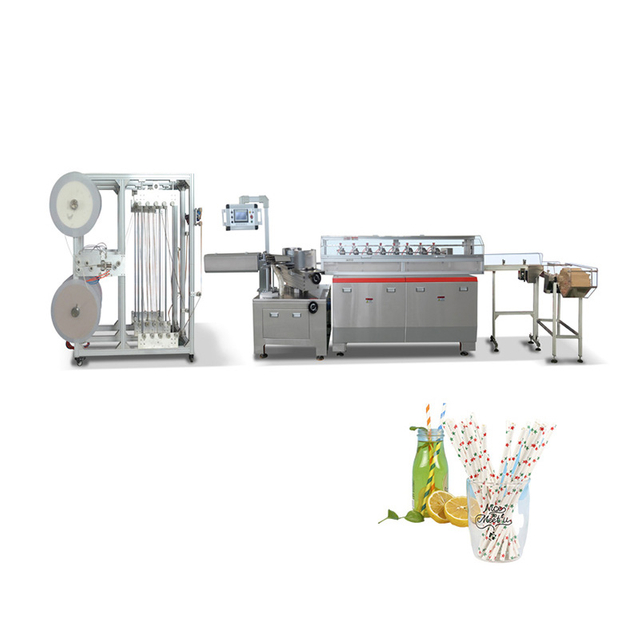
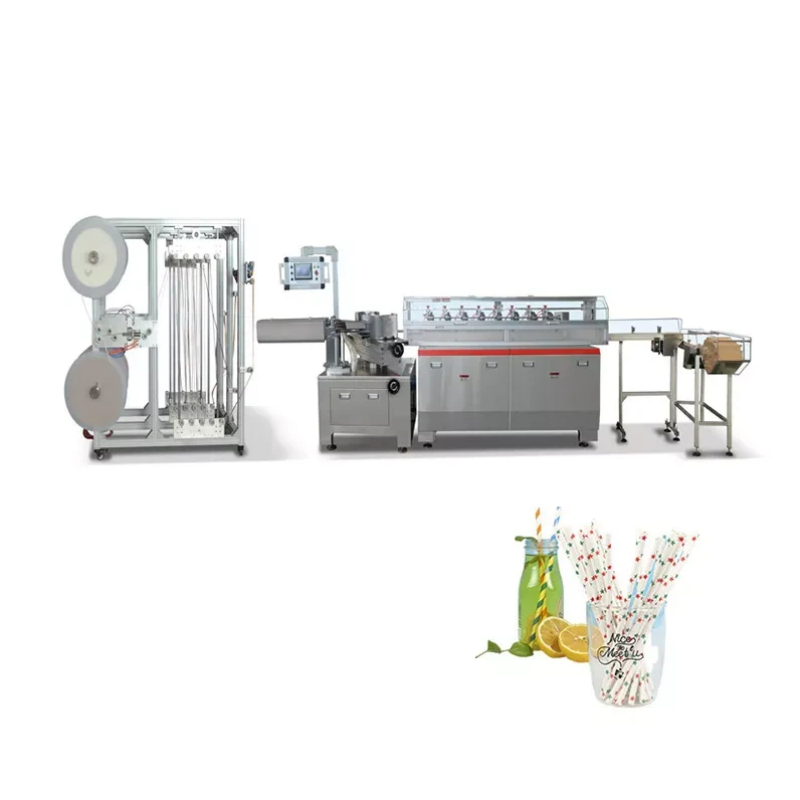
Most machines share the same main modules. They feed paper layers and form a tube. They seal the seam and cut to length. They collect and transfer straws to packing. In a no-glue setup, sealing and control become the star. Servo motion control can help repeatability. A stable cutter system protects length consistency. Some suppliers also promote integrated collecting and multi-cutter designs. You should still judge it by output stability. Ask for accepted straws per hour, not just top speed.
No glue production depends on a few core controls. Temperature must stay in the right window. Pressure must stay steady across the seam. Paper tension must stay stable across rolls. Alignment must stay centered during forming. If one drifts, quality can drop fast. The first signals are soft straws, seam lift, or length variance. Sensors must stay clean because dust blocks signals. Your team should log control settings and changes. It helps you repeat good runs. It also helps you diagnose problems faster.
Note: “No glue” reduces glue risks, but it raises control discipline requirements.
Key paper straw machine controls for no-glue success
Control area | What can go wrong | Fast check you can run |
Temperature | Weak seam or overheating marks | Compare zone readings, then test seam pull |
Pressure | Uneven sealing or seam lift | Check pressure stability, then inspect seam line |
Tension | Ovality, jams, or edge damage | Watch tension response at low speed |
Alignment | Uneven wall thickness, rough cuts | Verify guide position and tube centering |
Start from your orders, not brochure speed. Convert demand into accepted straws per hour. Add a buffer for scrap and stops. Many teams plan 10% to 25% buffer. Then map your diameter range and thickness needs. Large diameters often reduce stable speed. Thick walls can also lower stable speed. Ask suppliers for stable speed under your spec. Ask for proof from a long run. If they only show short clips, push for longer evidence. Stability beats peak numbers in real procurement.
A good configuration helps you repeat settings. Full-servo motion can support repeatability. Stable tension systems protect seam quality. Parameter presets help operators avoid guesswork. Multi-cutter systems can improve length stability and packing flow. Hygiene features can also matter for food buyers. Some machines claim sterilization functions. Treat it as an option, not a guarantee. Ask what method it uses and what it covers. Then judge if buyers care. If they do, build it into your acceptance tests.
Paper quality matters more in glue-free lines. Variations can change sealing strength and tube shape. Lock your layer count and gsm range early. Confirm roll width tolerance and winding quality. Ask paper suppliers for batch consistency data. Store rolls in stable humidity when possible. Humidity swings can change tension response. That can cause jams and uneven seams. A simple paper spec sheet helps supplier trials. It also helps you compare trial results fairly. When paper changes, rerun your tests. It protects your brand from drift.
Machine choice should match your full line flow. Think about collection, counting, and packing style. If you single-wrap, you need steady length and clean cuts. If you bulk pack, you need stable counting and low dust. Plan dust control and clean handling routes. Reduce hand contact points if buyers are strict. Add clear bins and labels for QA sampling. Also plan maintenance access around sealing and cutter modules. A clean layout saves time each shift. It also helps you pass customer visits.
Tip: Require a full trial plan, including long run, changeover, and sample tests using your paper.
No-glue is not always the best first step. Some markets care more about price than story. Standard drink straws may not need premium positioning. Glue systems also have long usage history in paper straws. Many lines use water-based adhesives for food packaging. If you can manage glue well, it can run stable. It can also be cheaper to buy at first. Some suppliers claim very high speeds on glue models, such as 300+ pcs/min. Your real result still depends on paper, glue, and drying stability.
Upfront price is only one number. Glue adds ongoing cost and daily labor time. It also adds cleaning time and clog risk. No-glue may cut glue spend and glue cleaning time. Yet it may require tighter control and better paper supply. If paper quality varies, scrap can rise fast. You should model cost per million accepted straws. Add labor, downtime, and rejects. Then compare both options using your own assumptions. This approach keeps procurement honest. It also makes finance approval easier.
Procurement works best when it uses clear rules. We can ask four simple questions. First, do buyers demand a no glue paper straw story? Second, do they test soak life hard? Third, can your factory control paper and environment well? Fourth, can your team run tighter controls and logs? If most answers are “yes,” no-glue fits well. If not, a glue model may be safer for now. Use trials to confirm your direction. Lock acceptance criteria in writing before you pay.
Decision matrix for glue vs no-glue
Decision factor | Glue model often fits | No-glue model often fits |
Buyer positioning | Cost-first, standard orders | Premium, compliance-driven buyers |
Factory conditions | Basic environment control | Strong paper storage and process control |
Team skills | Strong glue handling discipline | Strong parameter control and logging discipline |
Risk focus | Adhesive drift and cleaning | Heat, pressure, and paper consistency |
Note: Avoid “better” claims. Use “better for your case” decisions based on tests.
Acceptance tests should be simple and repeatable. Start with cut length consistency and burr checks. Then check seam integrity using a gentle pull test. Add soak tests in your target drinks and temperatures. Include hot drinks if your buyers serve them. Some machines claim 100°C performance. One supplier page states 100°C on a non-glue machine description. Treat it as a claim until you test it. Keep test durations consistent and recorded. Store samples and results in one folder. It helps you compare future batches quickly.
Most defects map to a few root causes. Softening can come from weak sealing or paper issues. Seam lift often points to heat or pressure drift. Ovality often points to tension or alignment problems. Rough cuts often point to blade wear or dust buildup. When defects appear, change one variable at a time. Start at feeding and tension. Then check sealing zones. Then check cutter timing and blade condition. Clean sensors and dust zones early. Paper dust can create false signals and drift. A calm method keeps you from chasing symptoms.
No-glue lines need clean control points. Dust can hurt sensors and sealing zones. Build daily cleaning around those areas. Keep a weekly deep-clean plan for guides and cutters. Log key parameters and defects each shift. Replace wear parts based on hours and defect trends. Keep spare blades and key sensors ready. Train operators to notice early signals. They often hear or feel changes first. When they report early, you avoid long stops. Maintenance discipline is the hidden engine behind no glue paper straw success.
Tip: If you see seam lift, slow down first, then check heat and pressure stability.
No glue paper straw benefits can be real in B2B sourcing. They can reduce glue-related stops and support a cleaner story. They can also improve soak performance in demanding drinks. Still, success depends on stable control and consistent paper.
Wenzhou Hongshuo Machinery Co., Ltd. helps buyers build reliable no glue paper straw production. Their paper straw machine solutions support full-servo control and efficient forming. Their OEM support and service guidance help teams scale output, cut scrap, and keep quality steady.
A: It is a straw sealed without added adhesive. Many lines use a paper straw machine that relies on heat and pressure control.
A: They want fewer glue-related risks and a simpler story. It can also help reduce stoppages and scrap in production.
A: Stable tension, repeatable settings, and consistent sealing control. A paper straw machine also needs clean cutting and reliable sensors.
A: Not always. It can cut glue cost, but it may need better paper control and tighter process discipline.
A: Slow down first, then check heat, pressure, and paper tension. Clean dust near sensors and sealing zones before you change settings.