T: +86-18066442232
E: sylvia@wzhongshuojixie.com
E: sylvia@wzhongshuojixie.com
Wanquan Industrial Zone, west of National Road 104, Sunlou Village, Wanquan Town, Pingyang County, Wenzhou City, Zhejiang Province
Views: 0 Author: Site Editor Publish Time: 2026-08-26 Origin: Site


Transitioning from standardized packaging to custom structural designs requires a major shift. You move from off-the-shelf tooling to bespoke manufacturing hardware. This transition presents a common decision dilemma for production managers. Investing in a custom mold involves upfront capital expenditure (CapEx) and production downtime. You must weigh these immediate costs against long-term brand differentiation. You also need to consider structural integrity and unit-cost reduction at scale. The ultimate goal is maximizing production efficiency without overspending on unnecessary tooling.
This guide provides production managers and packaging buyers with a strict, evidence-based framework. You will learn how to evaluate when custom mold tooling is a necessary investment. We will explore how to differentiate a smart structural upgrade from a costly over-engineering mistake. By analyzing volume thresholds, machinery compatibility, and supplier reliability, you can make a highly informed choice. Keep reading to discover how to align your packaging strategy directly with your manufacturing reality.
Standard molds force production lines to rely on conventional geometries. You are often limited to standard Regular Slotted Cartons (RSC) or basic tuck-end boxes. This limitation frequently leads to potential product damage during transit. Companies then overcompensate by relying heavily on excessive void-fill materials like bubble wrap or packing peanuts. This approach wastes warehouse space and inflates material costs. To solve this, manufacturers often look toward a bespoke paper box machine mold to streamline the packaging structure.
Upgrading requires a strict cost-benefit analysis. The upfront costs include engineering design, precision CNC machining, and the initial calibration of the new tooling. These expenses can be significant. However, the long-term savings often justify the initial CapEx. A well-designed custom mold reduces secondary packaging materials. It decreases manual assembly time on the floor. It also lowers shipping costs by optimizing the volumetric weight of your final product.
Establishing accurate volume thresholds is vital. You must determine the minimum order quantity (MOQ) and expected lifecycle volume required to amortize the cost of custom tooling. Custom tooling demands high-volume, sustained runs to break even. If your product line only requires short, seasonal runs, a standard mold might remain the most fiscally responsible choice.
Standard Tooling vs. Custom Tooling ROI Factors
| Evaluation Metric | Standard Molds | Custom Molds |
|---|---|---|
| Initial Capital Expenditure | Low to none (off-the-shelf) | High (Engineering & Machining) |
| Assembly Efficiency | Moderate (Requires tape/glue) | High (Auto-lock bottoms, folding tabs) |
| Void-Fill Requirements | High (Increases material costs) | Low (Snug fit built into design) |
| Volumetric Shipping Cost | Often inefficient | Highly optimized |
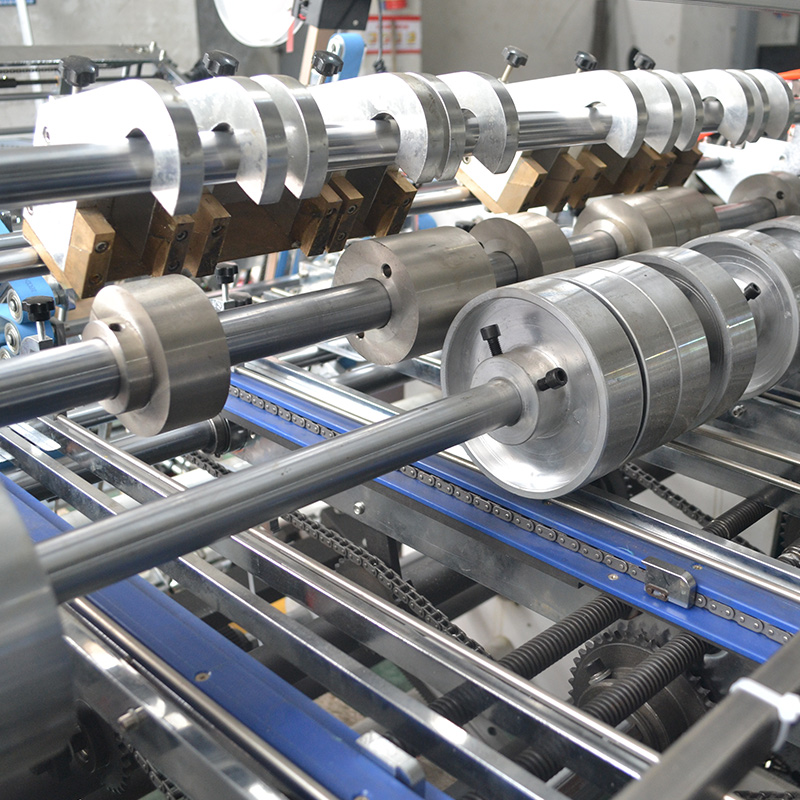
Before committing to bespoke tooling, you must assess machinery compatibility. You need to know if your existing forming machines can handle custom tooling without requiring extensive retrofitting. Heavy modifications can quickly erode your projected ROI. Consult your equipment manuals and internal engineering teams to verify dimensional constraints.
Material limitations also play a major role. You must match the mold specifications precisely to your target substrate. A mold designed for micro-flute corrugated cardboard behaves differently than one built for rigid board or folding carton. The die-cutting pressure and scoring depth must align with the paper's specific caliper and grain direction.
Precision and tolerances dictate the success of your manufacturing run. You must define acceptable tolerance variations in your paper box machine mold specifications to ensure seamless folding and gluing at high speeds. Even a deviation of 0.1mm can cause frequent machine jams, leading to unacceptable operational downtime.
Durability directly impacts lifecycle performance. You must choose the right metallurgy for your mold based on expected cycle counts and friction wear. Standard steel works for shorter runs, while hardened alloys and aviation aluminum provide superior longevity for millions of cycles.
| Material Type | Ideal Application | Durability Profile |
|---|---|---|
| Standard Carbon Steel | Low-to-medium volume runs | Moderate wear resistance |
| Hardened Alloys (e.g., D2) | High-friction, heavy board | High hardness, resists scoring wear |
| Aviation Aluminum | High-speed, lightweight cartons | Low weight reduces machine motor strain |
Standard dies frequently fail when tasked with modern packaging demands. They struggle to execute complex folds, auto-bottoms, or integrated dividers reliably. When you push standard tooling beyond its design limits, you risk inconsistent folds and structural weakness. Upgrading allows you to engineer solutions tailored to exact product dimensions.
Niche applications highlight the true value of bespoke design. In food packaging, you often need boxes that feature structural ventilation, leak-proof corners, or specific grease barriers. Standard molds cannot achieve these precise geometric folds without compromising production speed. By utilizing a custom box shapes paper box machine mold, manufacturers can integrate functional elements directly into the carton structure.
Fragile goods require equally rigorous engineering. Products like resin art, cosmetics, and ceramics demand superior protection. Instead of buying separate foam inserts, you can create custom configurations that form built-in shock-absorbing inserts out of the same paperboard. This unified design approach simplifies your supply chain.
Always maintain a strict outcome focus. You should align the customized shape directly with tangible business metrics. A successfully engineered box should result in a measurable reduction in return rates due to damage. It should also create an increase in retail shelf stability, ensuring the product stacks neatly and presents well to consumers.
Custom tooling does not happen overnight. You must account for strict lead time considerations. It typically takes 4 to 8 weeks for a complete tooling cycle. This timeline includes CAD design approvals, precision CNC machining, and the final physical delivery of the hardware. Rush orders often compromise engineering precision, so plan your production schedules accordingly.
The testing protocol remains non-negotiable. You must understand why 3D prototyping and short-run beta testing are required before moving to full-scale production. A custom paper box machine mold might look perfect in a CAD file but behave differently under the physical stress of a forming machine. Beta testing helps catch substrate jamming before you commit to a 100,000-unit run.
Operational downtime is another critical risk factor. You must accurately calculate the labor and time costs associated with machine changeovers. Operator retraining is often necessary for complex new folds. The initial calibration phases will slow down your line speed temporarily. Factor this learning curve into your production forecasts.
Quality assurance ensures the mold performs as intended over its lifecycle. You need to identify common points of failure early.
Choosing the right manufacturing partner dictates the success of your project. Start by verifying the supplier's engineering expertise. You need to know they can accurately translate basic 2D structural designs into high-precision 3D mold blueprints. Ask for specific examples of complex geometrical folds they have successfully engineered in the past.
Trial and calibration support is a major differentiator. Does the supplier offer on-site calibration assistance? Do they guarantee mold performance upon installation? The best suppliers do not just ship a piece of metal; they ensure it integrates seamlessly into your production line. Seek out a paper box machine mold supplier who provides dedicated commissioning support.
Assess their warranty and maintenance lifecycle support. Custom molds suffer wear and tear. You need to know if the supplier offers routine sharpening, reliable repair services, and quick access to replacement parts for high-wear components. A strong maintenance contract prevents minor tooling issues from causing weeks of downtime.
Finally, watch out for clear red flags. Avoid suppliers who refuse to provide material certificates for the mold metals. If they cannot prove the steel's hardness rating, you risk premature tool failure. Likewise, avoid partners who lack verifiable case studies of similar machine integrations. Trust requires transparency.
The final decision framework for upgrading your tooling rests on clear, objective criteria. You should only proceed with customization if there is a definitive structural requirement that standard dies cannot meet. You must verify full machine compatibility to avoid expensive retrofits. Furthermore, your volume model must comfortably support the initial capital expenditure.
When properly executed, bespoke tooling reduces secondary packaging, speeds up assembly, and protects products better. It is an investment in manufacturing efficiency rather than just aesthetic appeal.
A: A mold's lifecycle depends heavily on the chosen material and maintenance frequency. Standard steel molds typically last for hundreds of thousands of cycles. Hardened alloys and aviation aluminum can easily surpass millions of cycles. Regular cleaning and scheduled blade sharpening significantly extend this lifespan.
A: The entire process generally takes between 4 and 8 weeks. This timeline covers initial 2D-to-3D CAD approval, CNC machining, physical assembly, and necessary beta testing. Complex structural requirements or specialized metallurgy can push this timeline closer to the 8-week mark.
A: It is highly discouraged. Scoring and cutting tolerances are engineered for a specific substrate caliper. Switching to a thicker board often causes paper jamming, while thinner boards may suffer from incomplete cuts or weak score lines. You risk severe production delays.
A: Yes, initially. The first few changeovers will require more time for precise calibration and operator retraining. However, integrating quick-lock mold systems and documenting exact pressure settings can reduce this downtime significantly once your team learns the new tooling.