T: +86-18066442232
E: sylvia@wzhongshuojixie.com
E: sylvia@wzhongshuojixie.com
Wanquan Industrial Zone, west of National Road 104, Sunlou Village, Wanquan Town, Pingyang County, Wenzhou City, Zhejiang Province
Views: 0 Author: Site Editor Publish Time: 2026-08-03 Origin: Site


Transitioning to glue-free paper straws eliminates strict adhesive compliance risks. It quickly removes frustrating drying bottlenecks from your production floor. However, this major shift fundamentally changes your equipment load profiles. Unlike traditional adhesive systems, modern glue-free production relies entirely on thermal or ultrasonic bonding. You must provide specific mechanical rigidity to handle these intense forces. The setup also demands specialized power configurations and precise tension control to prevent material tearing. Without these adjustments, your product quality will inevitably suffer.
Properly sizing your equipment guarantees a viable operational return. You will learn how to balance your factory footprint, manage heavy electrical loads, and predict daily output capacity. We will explore practical ways to avoid over-capitalizing on unnecessary machine features. By following these structured guidelines, you can streamline your facility upgrade path safely. A modern paper straw making machine operates under extreme mechanical stress, demanding careful evaluation.
Abandoning adhesives means you rely entirely on heat, friction, or ultrasonic welding. These advanced mechanisms bind paper layers together permanently. Investing in a high-quality glue-free straws paper straw making machine requires a distinct engineering approach. Traditional machines simply pull paper through wet glue baths. New technologies fuse dry, specialized paper grades using concentrated energy.
This technology shift drastically impacts your overall machinery footprint. Removing glue baths and long drying racks reduces your linear floor space requirements. However, it significantly increases the complexity of the central sealing station. Your engineers must accommodate bulkier ultrasonic generators or heavy-duty thermal rollers.
Vibration and stability become your most critical engineering concerns. Ultrasonic welding creates intense high-frequency vibrations. High-pressure thermal rollers exert immense physical force on fragile paper layers. To maintain precision, you need heavier chassis construction. A lightweight frame will vibrate excessively. This uncontrolled vibration causes micro-fracturing in the paper fibers, leading to weak seams.
Miscalculating your sizing carries severe operational penalties. Undersizing your equipment leads directly to product failure. Weak seams unravel quickly in consumer liquids. Conversely, oversizing your equipment inflates your daily energy demands. This degrades your unit economics unnecessarily. You must find the optimal middle ground.
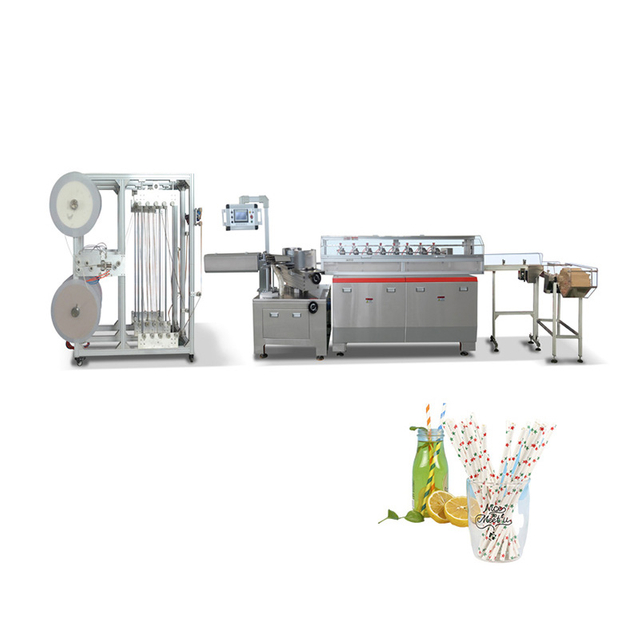
When determining your paper straw making machine specifications, you must evaluate several interconnected variables. You cannot simply look at top-end speed. You must balance capacity, power, and physical mass.
Establish a realistic target for pieces per minute. Standard facilities often target between 200 and 500 pieces per minute. You must distinguish this metric from raw linear speed measured in meters per minute. High linear speeds look impressive on brochures. However, they do not always translate to usable finished products.
Factor in your daily operational reality. Glue-free bonding often requires slightly longer dwell times. Dwell time refers to the exact millisecond the paper remains under heat or ultrasonic pressure. Wet-glue machines can run faster because the bond cures later on a drying rack. Glue-free bonds must cure instantly on the mandrel. This dictates distinct speed limits.
Baseline power requirements change dramatically. Traditional motors draw predictable, steady currents. Glue-free mechanisms often establish an electrical baseline between 7kW and 10kW just for the sealing technology. This excludes the main drive motors and automated cutting systems.
Assess your internal facility constraints immediately. You need robust three-phase power necessities. Ultrasonic generators demand dedicated electrical circuits. If you share circuits across multiple machines, you risk severe voltage drops. Voltage drops cause inconsistent ultrasonic frequencies, producing unsealed straws.
Calculate your floor space requirements carefully. Measure the length and width needed for the main chassis. You can safely exclude the omitted drying conveyor. This frequently frees up valuable square footage in your plant. You can use this space for packaging equipment instead.
Verify your concrete floor load-bearing capacities. Industrial-grade stability requires a minimum machine weight of 1400kg. Heavy machines stay anchored during continuous servo-driven cutting cycles. Lightweight floors might require structural reinforcement before installation.
| Specification Metric | Traditional Glue System | Glue-Free (Thermal/Ultrasonic) System |
|---|---|---|
| Linear Footprint | Large (Requires 3-5m drying rack) | Compact (No drying rack needed) |
| Minimum Machine Mass | 800kg - 1000kg | 1400kg+ (Vibration dampening) |
| Power Requirements | Standard 3-5kW (Drive motors) | 7kW - 10kW+ (Generators + Drives) |
| Speed Bottleneck | Adhesive drying time | Bonding dwell time |
Scaling operations often demands a custom paper straw making machine tailored precisely to your product lines. Off-the-shelf models work for standard sizes. Specialized beverage markets require far more flexibility.
You must size your central mandrel and cutting mechanism for varying SKUs. Standard juice straws typically measure 6mm in diameter. Boba tea straws measure 8mm or 12mm. A customized machine allows operators to swap mandrels rapidly. This minimizes expensive changeover downtime between production runs.
Evaluate your cutting system architecture based on output goals. Multi-knife cutting systems divide the workload across several blades. This allows for higher continuous extrusion speeds. Single-knife systems cost less upfront. However, they limit your maximum output capacity. Heavy glue-free paper grades often dull single knives much faster.
Accommodating specific glue-free paper grades requires advanced handling. Glue-free paper often features pre-applied thermal coatings. These coatings react poorly to excessive friction. Your material handling system must pull the paper smoothly. Jerky movements will scrape off the essential thermal coating before bonding occurs.
Size your motorized paper reel stands correctly. Calculate your maximum preferred roll diameter. Larger rolls mean fewer manual changeovers per shift. Implement automatic splicing capabilities. Splicers join a new paper roll to the expiring one without stopping the machine. This feature drastically increases your daily yield metrics.
Selecting a reliable paper straw making machine supplier dictates your long-term success. The market contains many vendors offering hastily modified equipment. You must filter out inexperienced builders.
Demand true specialization in non-glue technology. Shortlist suppliers offering proprietary or proven glue-free bonding mechanisms. Avoid vendors selling retrofitted traditional machines. Slapping a basic ultrasonic horn onto a flimsy wet-glue chassis never yields consistent commercial results. The underlying engineering must support the technology natively.
Insist on rigorous Factory Acceptance Testing (FAT). Never sign off on a machine based on generic video demonstrations. Demand a live run using your exact paper substrate. Paper grades vary wildly in moisture content and thermal reactivity. You must prove the equipment seals your specific material securely before shipping.
Evaluate the supplier’s spare parts availability thoroughly. Glue-free machines use highly specialized wear parts. Ultrasonic horns, anvils, and precision thermal rollers degrade over time. Ask your vendor for guaranteed lead times on these custom components. Extended downtime waiting for a replacement horn will destroy your quarterly profit margins.
Your immediate next-step action involves requesting a detailed specification sheet. Map the stated machine kW, total structural mass, and continuous output speed against your production targets. Force the vendor to guarantee specific yield numbers under contract.
Sizing a glue-free machine is rarely about maximizing your floor space. It requires securing the exact electrical infrastructure, structural mass, and tension control needed to handle intense thermal or ultrasonic bonding. The physics of glue-free manufacturing demand robust engineering solutions.
We strongly recommend prioritizing machine stability and exact power specifications over theoretical maximum speeds. A heavy, well-powered machine running at a moderate speed yields far more consistent, liquid-resistant products. This approach dramatically reduces your scrap rates.
Take immediate action by engaging your internal engineering teams today. Audit your current facility power limits in kW. Check your concrete floor load limits. Gather this crucial infrastructure data before requesting vendor quotes. Proper preparation ensures a seamless and highly profitable equipment installation.
A: No, it typically requires less linear space because it eliminates the need for extended drying racks or heated conveyor sections associated with wet adhesives. This frees up valuable factory footprint for other operations.
A: Industrial-grade models generally weigh upwards of 1400kg. This mass is strictly necessary to dampen the vibrations of high-pressure or ultrasonic sealing units and ensure precise cuts without fracturing the paper.
A: While theoretically possible, it is rarely cost-effective. The tension control, power requirements (often 7kW+ for the sealing unit alone), and tooling integration usually dictate purchasing a purpose-built or highly customized chassis.